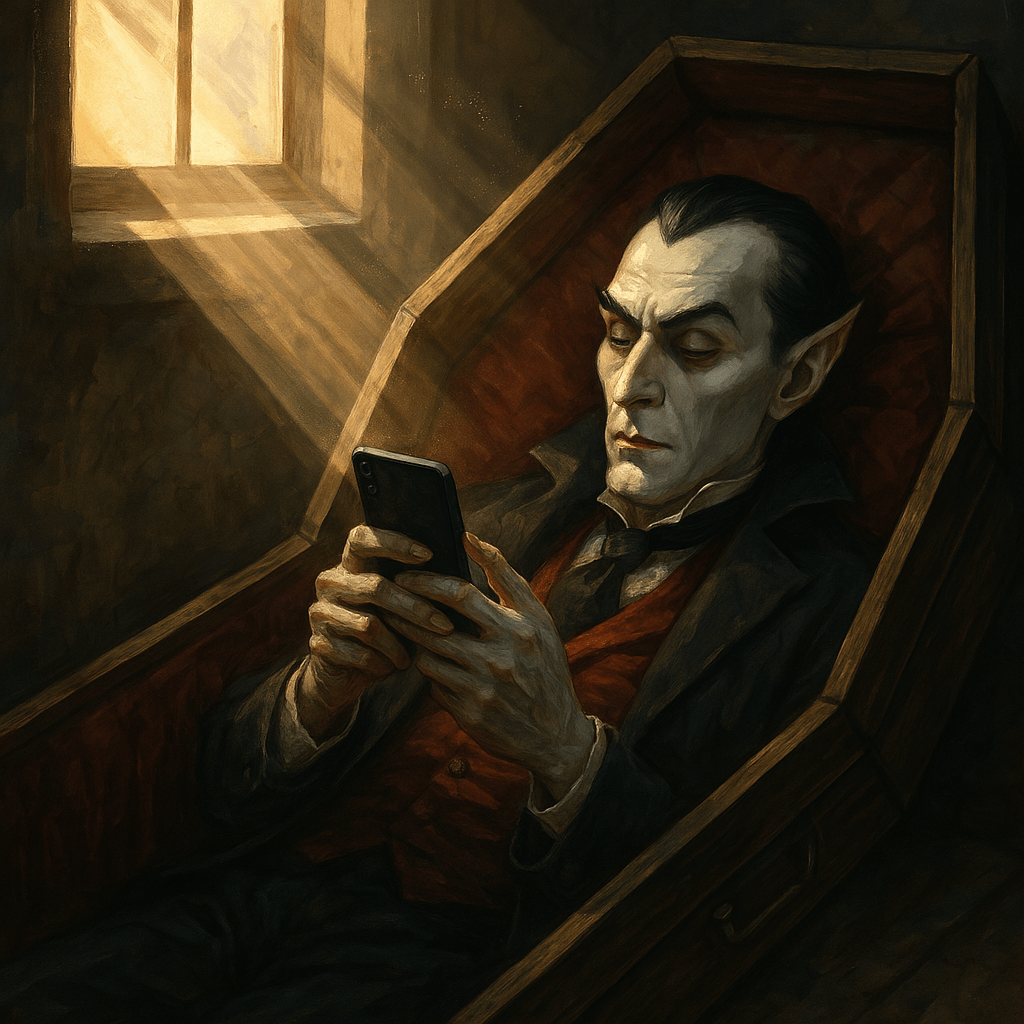
ROMANTASY characters have a lot to worry about so, it’s no wonder they often have difficulty sleeping. They do often comment on what helps them to drop off. Sometimes it’s strong faerie wine or a potion, but more often it’s a comfortable environment, sex or helpful self-talk that does the trick.
It’s common to fear that one disturbed night will ruin the next day. Even when we get through that and sleep well the following night, we may still worry about difficulties sleeping again. Some people have trouble getting to sleep and others wake in the middle of the night feeling wired, which is often a result of long-term stress. Whatever the reason, once sleep becomes disrupted, it’s easy to slip into a habit of worrying that you’re not sleeping enough. It’s then easy to work yourself up so that, by bedtime, you feel convinced you won’t sleep at all. However, sleep experts say anxiety like this is one of the major causes of sleepless nights. Even if sleep doesn’t come right away, simply lying quietly in bed with a calm mind can help.
Welcoming wakefulness
Sometimes, rather than battling wakefulness, it can be more helpful to try welcoming it as an opportunity to relax with an activity we might not usually have time for. It’s only relatively recently that we have expected to sleep through for seven or eight hours. Before the Industrial Revolution, it was more usual to have two sleeps with an activity in the middle. Though they probably used the time to milk cows, we can use it to catch up on Romantasy reading or even just to relax. It can be soothing to listen to calming sounds such as waves, rain, or white noise; to try speech radio, immersive Romantasy audiobooks, or podcasts that you enjoy—something mellow and familiar. If you’re worried about waking a sleeping partner, there are sleep headphones, slim speakers you can slide under your pillow or specially designed audio pillows which play so only you can hear. Try to avoid screens if you can – “just one more TikTok” could unravel the whole night.
To physically calm racing thoughts, take a deep breath in, and exhale slowly, drawing out the breath. Imagine the out breath flowing down and through your body (also see Breathe! for more information). If after 15–20 minutes you’re still tossing and turning, you can try a reset. For instance, by the time you use the loo, get some water and brush your teeth, the distraction may be enough to reset your nervous system. A small torch or bedside light is helpful to avoid disturbing your partner if you need to get up.
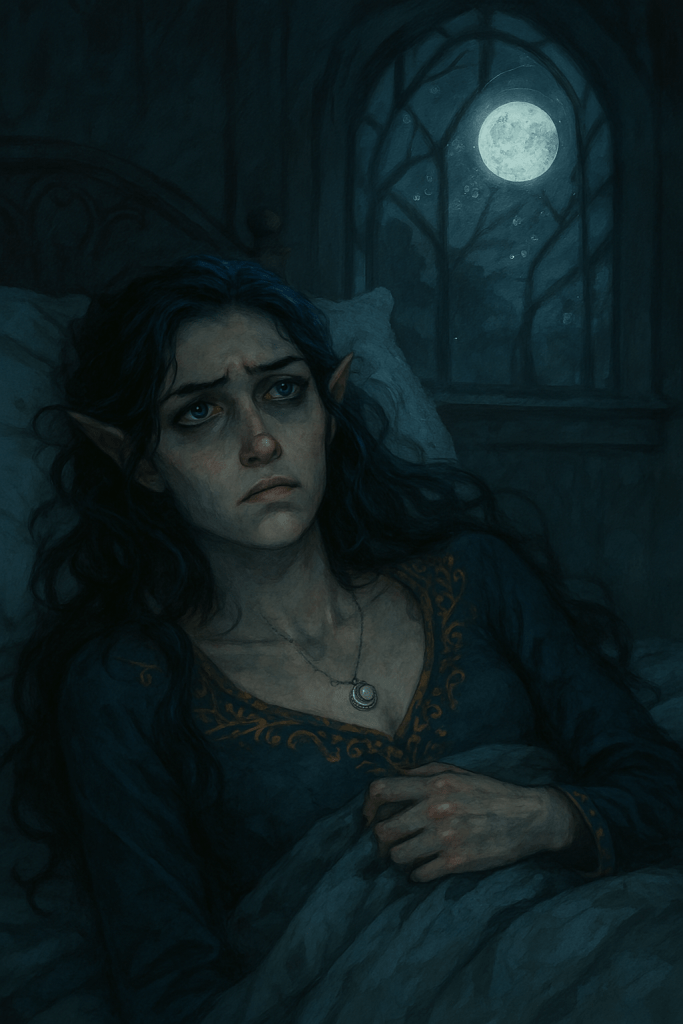
If, like Freya in Danielle L. Jensen’s A Fate Inked in Blood, or Ophelia in Kaylie Smith’s Phantasma, you’re kept awake by critical voices, try gently explaining to them that you’re an adult and can manage without their assistance. These parts of you are only trying to help, so thank them for their concern and assure them that you can take things from here. Sounds nuts, but working with these parts/voices can be so helpful. They usually develop early in life, with critical voices reflecting comments that were made by authority figures like parents or teachers. We had no choice but to pay attention when these remarks were first made, but now we’re old enough to make our own independent self-appraisal and develop our own self-talk.
Of course, sleep will be more difficult if your sleep space doesn’t feel safe and comforting, so make sure your bed is well made, with no rumpled sheets and that you’re warm enough, using bed socks, a hot water bottle, cuddly toy or extra blanket if you feel the cold. Being too hot, however, can keep us awake while a chill can assist sleep. A cool pillow can offer relief, especially if you’re experiencing night sweats. If light is bothering you, invest in blackout curtains and use a side light or dimmer before bed to start slowing the pace. Soothing smells like camomile or lavender also help to create a tranquil mood.
It’s sensible to avoid large or spicy meals, caffeine, and alcohol near bedtime. Drinking alcohol can send you off to sleep, but you’ll probably be wide awake with the dry horrors after a few hours. Or be up all night dancing with ACOTAR’s Rhysand if you’ve had a drop of his faerie wine. There’s some evidence that a warm milky drink can have mild sedative effects. Probably more significantly, as part of a bedtime routine, that relaxing mug of cocoa can help signal to the brain that it’s time for shuteye. In fact, a consistent routine is the magic trick for sleep, so where possible go to bed and wake up at the same time each day, including on days off and weekends. Trying to make sure you get some daylight and exercise can help encourage sleep. An evening walk at sunset or dusk in summer can be lovely, or a walk to see people’s Christmas lights is a fun ritual in December.
Sync your bedtime
If you have a partner, sync your bedtime and share a gentle moment – reading, chatting or cuddling before you settle down for the night. Skip conflict or serious discussions until the next day, but try not to end on an argument or you’ll just lie awake worrying. Some people – especially Romantasy couples following a battle – find that partnered intimacy or self-pleasure encourages deeper sleep, but don’t rely on your partner for sex every night. And try not to use online porn last thing, as the blue light may just wake you up or you may be tempted to keep searching for that one illusive image…
Some people also find it helpful to mentally switch off and prepare for the next day before they go to bed. For instance, to release mental clutter, write down any worries in two columns, dividing them intothings you can and can’t change. Make small action notes under the “can change” column. For everything else, remind yourself that rest is the best way to help yourself and that worrying won’t fix the unchangeable. If thoughts about tomorrow keep circling, write out what needs to be done, assign times for this and consider who might be appropriate and available to help. Where possible, chunk jobs down into smaller steps so that they seem less overwhelming. You’ll also get a greater sense of achievement, and an endorphin hit, as each one is completed. Imagining an entire job at once is just overwhelming and stressful.
Many people find it helps their overall wellbeing to end the day on a positive note, jotting down three things they enjoyed that day and three achievements. They don’t have to be major. Maybe you brewed the perfect cup of tea. Maybe you gave someone a warm smile. Maybe you stayed on your dragon for a record time without slipping. These moments matter just as much as big wins.
Know when to seek help
Do take positive action if physical discomfort regularly interrupts your night — if, for instance, you are experiencing disruptions like pain, excessive thirst, frequent loo visits, loud snoring, restless legs or recurring nightmares — consult your GP who can explore treatments or refer you for sleep support.
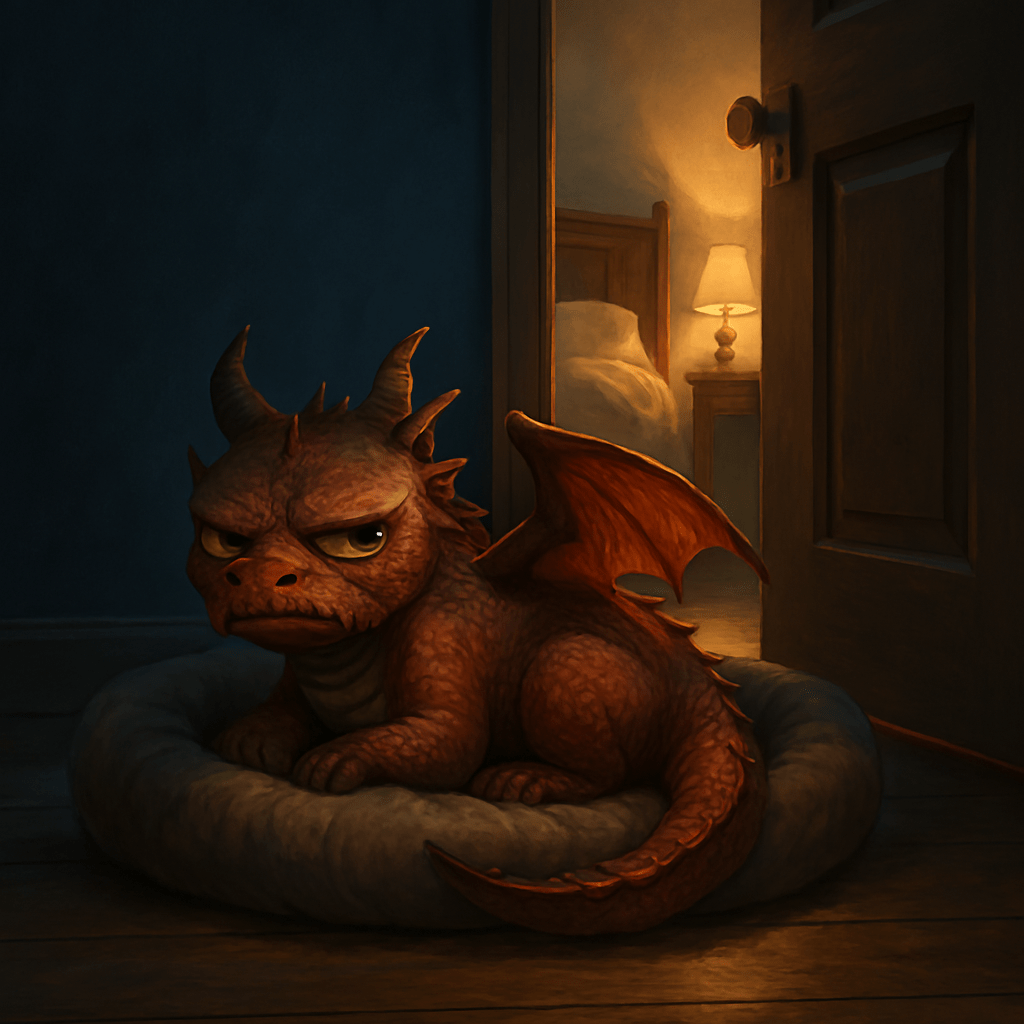
And, finally, keep pets and dragons out of the bedroom if you can, as they can be noisy, demanding and hot! TRT

 The Romantasy Therapist
Leave a comment