
Couples often have a special way of talking to one another, including pet names, funny words and even kooky sounds. They often use a form of baby talk which can make observers uncomfortable, as witnessing the way they interact can feel intrusive, if not a bit gross. It isn’t that there’s anything wrong with baby talk. In fact, it’s a way couples bond, but it is very personal to the couple.
Romantasy couples rarely use Baby Voice, but the guys do often have special names for the women. Often first used in the ‘enemy’ stage, when bantery flirting begins, it’s a way of creating intimacy and demonstrating affection. For instance, in Rebecca Robinson’s The Serpent and the Wolf, Reid calls Vaasa ‘Wild One’. Blackwell, in Kaylie Smith’s Phantasma, refers to Ophelia as ‘Angel’. Rather than calling her ‘The Maiden’ when making his guard’s vows, in Jennifer L. Armentrout’s From Blood and Ash, Hawke calls his charge ‘Poppy’, a name only used by those closest to her. In Danielle L. Jensen’s A Fate Inked in Blood, Bjorn calls Freya ‘Born-in-Fire’, a monika which goes on to be used by others with respect.
UNCOMFORTABLE TO WITNESS
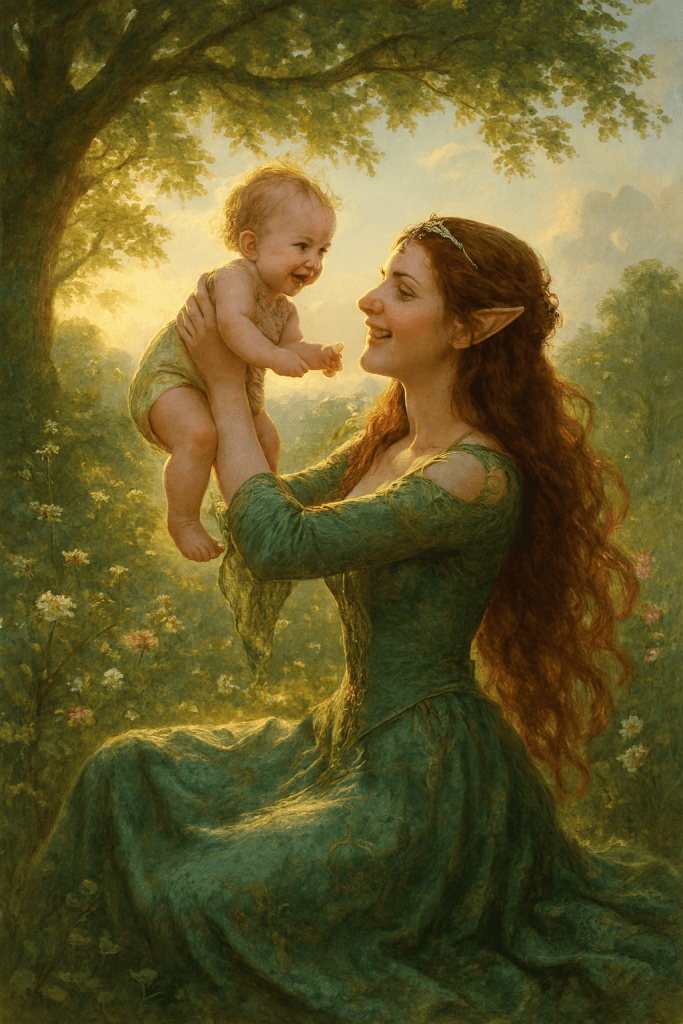
All genders use Baby Voice, often slipping into it unconsciously. Even if we try not to use it, we may find ourselves doing so when we have a difficult conversation or need a favour. It’s also used during sex or sexual initiation. Most couples who use Baby Voice and language seem comfortable doing so, even finding themselves doing it when they disapprove or consciously try to avoid it. It often reflects the way parents use it with their babies. When one partner is feeling vulnerable, the other partner responds with a soothing tone. It can consequently be upsetting when a partner doesn’t reciprocate and may make the other partner feel unheard or unsafe. This is particularly the case if they both used Baby Voice in the past. Stopping is often a sign that the relationship has changed and become less intimate.
This intimacy is what makes Baby Voice so uncomfortable to witness when it’s used by couples. It feels like something that shouldn’t be seen, so often causes a huge ick response. It often makes witnesses feel excluded too. This includes children who may feel left out when their parents start being lovey dovey, and can lead to strong anti-Baby Voice reactions when they grow up. Some even avoid PDAs completely. Couples using Baby Voice are usually blissfully unaware of its effects — as, to them, it feels completely natural.
How do you feel about Baby Voice? TRT
Also check out: Baby Voice: Why do we do it wi…–THE REAL SEX EDUCATION – Apple Podcasts

 The Romantasy Therapist
Leave a comment