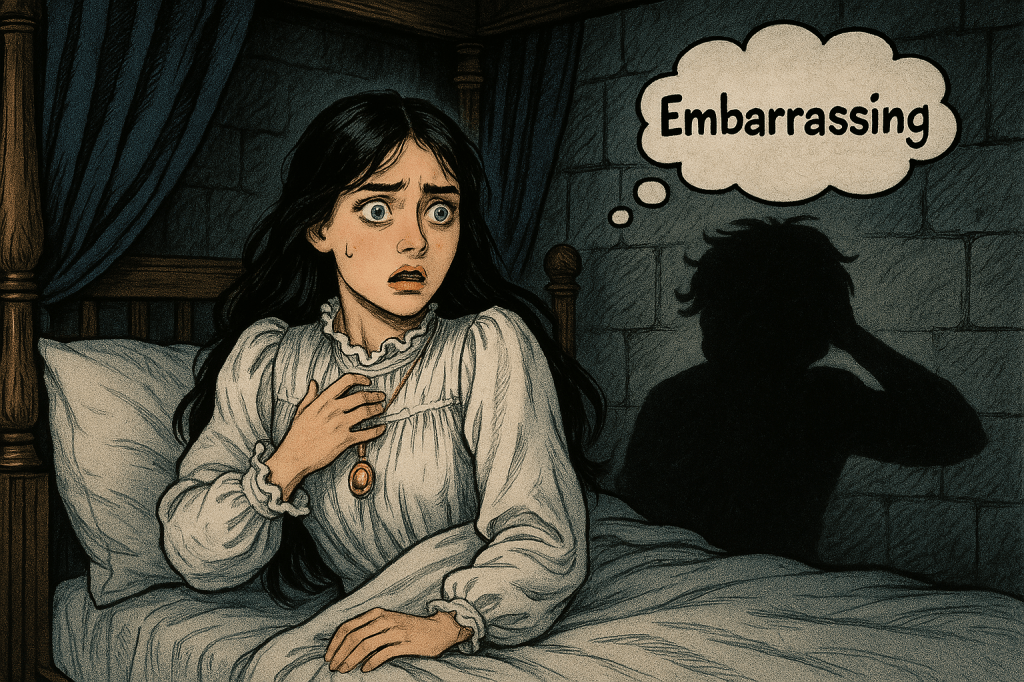
In Kaylie Smith’s dark fantasy romance Phantasma, Blackwell helps Ophelia to self-regulate with breathing exercises when she is unable to sleep due to intrusions from The Shadow Voice. In Danielle L. Jensen’s A Fate Inked in Blood, Freya wishes there was a way ‘to not be constantly thinking’. Bodil teaches her breathing exercises to help. Breathing exercises help regulate the nervous system and promote relaxation, especially during panic or sleep difficulties.
There are different methods of breathing to regulate, so it’s worth experimenting with these to find your favourite. They are most effective if they’re practised regularly, ideally for five to 10 minutes a day every day, because your brain becomes increasingly accustomed to them and their purpose, so eventually begins relaxing as soon as the exercise starts. But, as with every new skill, it is most effective when need it if you practise regularly.
7:11 BREATHING
This technique involves counting to seven on the in-breath and 11 on the out-breath while maintaining a comfortable, steady pace, making each inhaled breath last longer than each exhaled breath, which stimulates the parasympathetic nervous system. First, count from one to seven as you take a big breath in. Then, at the same rate, count from one to 11 on a more gentle “out” breath.
Counting is distracting and also ensures the out-breath is longer than the in-breath. Continue this pattern until you feel more regulated. Keep the breathing comfortable and consistent and don’t take bigger breaths than you can manage.
SQUARE BREATHING
This exercise can also help to rapidly reduce anxiety, and also involves counting. First breathe in through the nose, filling the lower lungs by slowly extending your belly as you count to four. Then hold your breath as you once again count to four.
Count to four as you thoroughly exhale, pushing out the air with your belly. Now hold your lungs empty as you count to four.
Repeat this process for up to five minutes, keeping your breathing slow and steady.
DIAPHRAGMATIC BREATHING
Lying on your back on a flat surface with your knees bent, place one hand on your upper chest and the other just below your rib cage. This allows you to feel the movement of your diaphragm, the large dome-shaped muscle at the base of the lungs, as you breathe.
Keeping the hand on your chest still, breathe in slowly through your nose so that your stomach moves out against your hand. Then gently tighten your stomach muscles, letting them move inward as you breathe out.
POLYVAGAL RESET
This exercise involves steady measured breathing as preparation, and is highly effective in managing anxiety, especially when regularly practised.
Preferably lying on your back, interweave the fingers of both hands and rest them behind your head. Take some slow deep breaths. When you feel comfortable, look straight ahead and then, without moving your head, move your eyes to look to the right for a count of 50 or until you spontaneously yawn, swallow or sigh.
Return your eyes to the centre and then this time look to the left, keeping your head still. It’s important to only move your eyes. Remain looking to the left for a count of 50 or until you find you yawn, swallow or sigh.
Always do the exercise to both right and left, whether or not you yawn, swallow or sigh. If you haven’t done so after looking to the left, keep repeating the exercise until you do.
What are your favourite self-regulation strategies? TRT
.
 The Romantasy Therapist
Leave a comment